
Precious Metals
14K vs. 18K Gold vs. Platinum
Metal sets the tone of a ring and shapes how it wears over decades. Each option is beautiful; the right one depends on color, feel and care preferences.
Metal sets the tone of a ring and shapes how it wears over decades. Each option is beautiful; the right one depends on color, feel and care preferences.
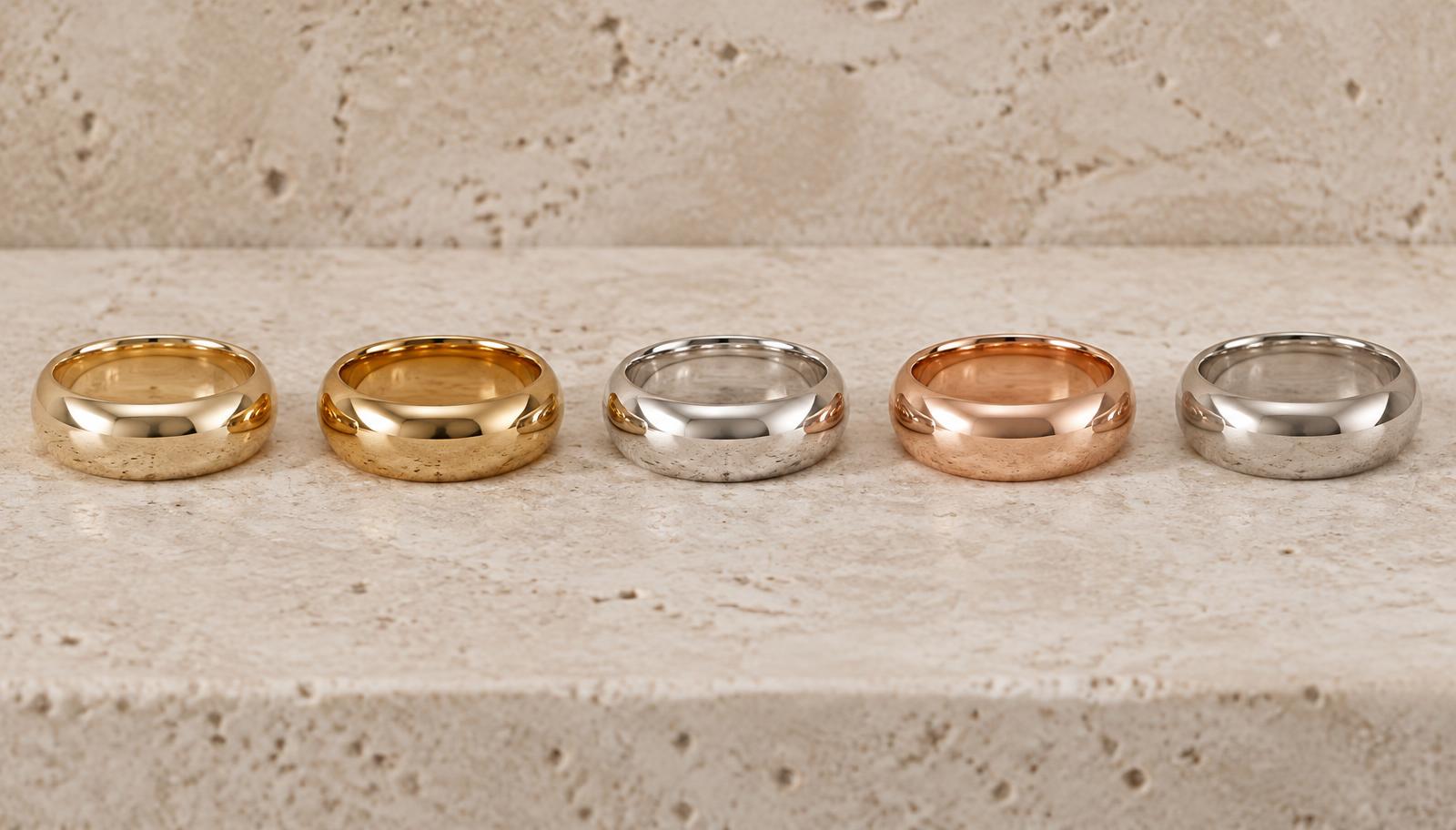
14K Yellow Gold
14/24 gold · approximately 58.3%
18K Yellow Gold
18/24 gold · 75%
White Gold
May be rhodium finished by product
Rose Gold
Gold alloy warmed with copper
Platinum
Naturally white; alloy varies by product
01
Gold purity, explained
Karat measures gold purity in 24 parts. 14K is 14/24 pure gold (about 58.3%); 18K is 18/24 (75%). The remainder is alloy metals that add strength and set the color. Karat (purity) is different from carat (diamond weight).
- 14K — stamped 14K or 585
- 18K — stamped 18K or 750
- Platinum — commonly stamped PT950 or PLAT
02
Yellow, white and rose gold
Yellow gold keeps a warm, classic glow. Rose gold gains its blush from copper in the alloy. White gold is alloyed toward a pale tone and is often finished with rhodium plating for a bright white surface; that plating gradually wears and can be renewed during routine maintenance.
03
Platinum
Platinum is naturally white, dense and weighty on the hand. Over time it develops a soft satin patina, which some clients love and others prefer to have polished. When platinum is scratched, metal is generally displaced rather than lost.
04
Everyday wear and sensitivity
18K feels richer in color; 14K is somewhat harder and more resistant to everyday scratches. If you have known metal sensitivities, ask us about the specific alloy and consult a medical professional — we do not make medical claims about any metal.
05
Metal and diamond color
Yellow and rose gold can add warmth to a diamond’s appearance, while white gold and platinum keep it looking cool and bright. Some clients choose a white-metal head with a yellow-gold band for balance where the design allows.