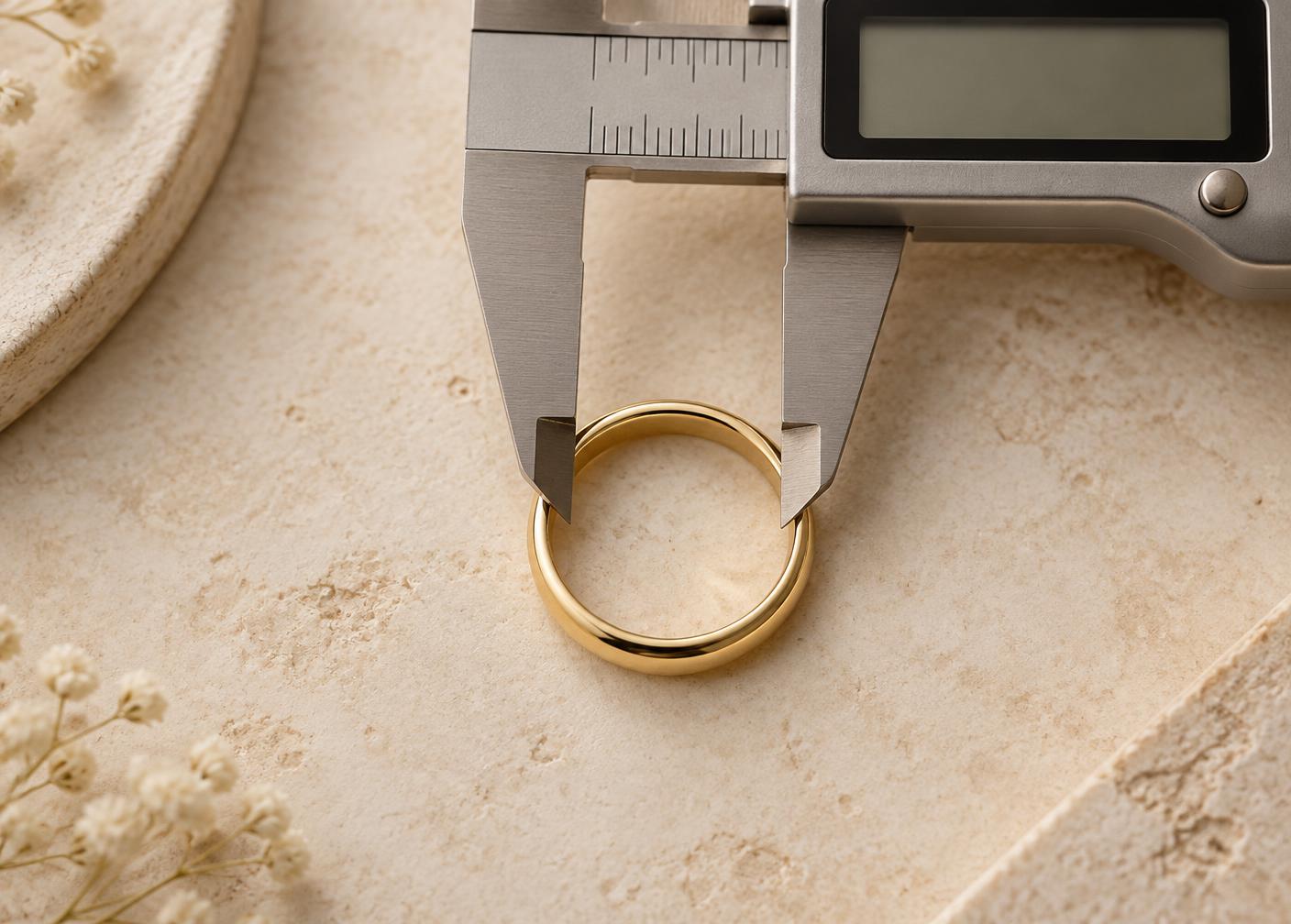
Ownership & Care
Caring for Diamond Jewelry
Guidance for cleaning, storing, protecting, and enjoying your jewelry for years to come.
Diamonds are durable, but settings and metals appreciate attention. A few simple habits keep a piece bright for a lifetime.
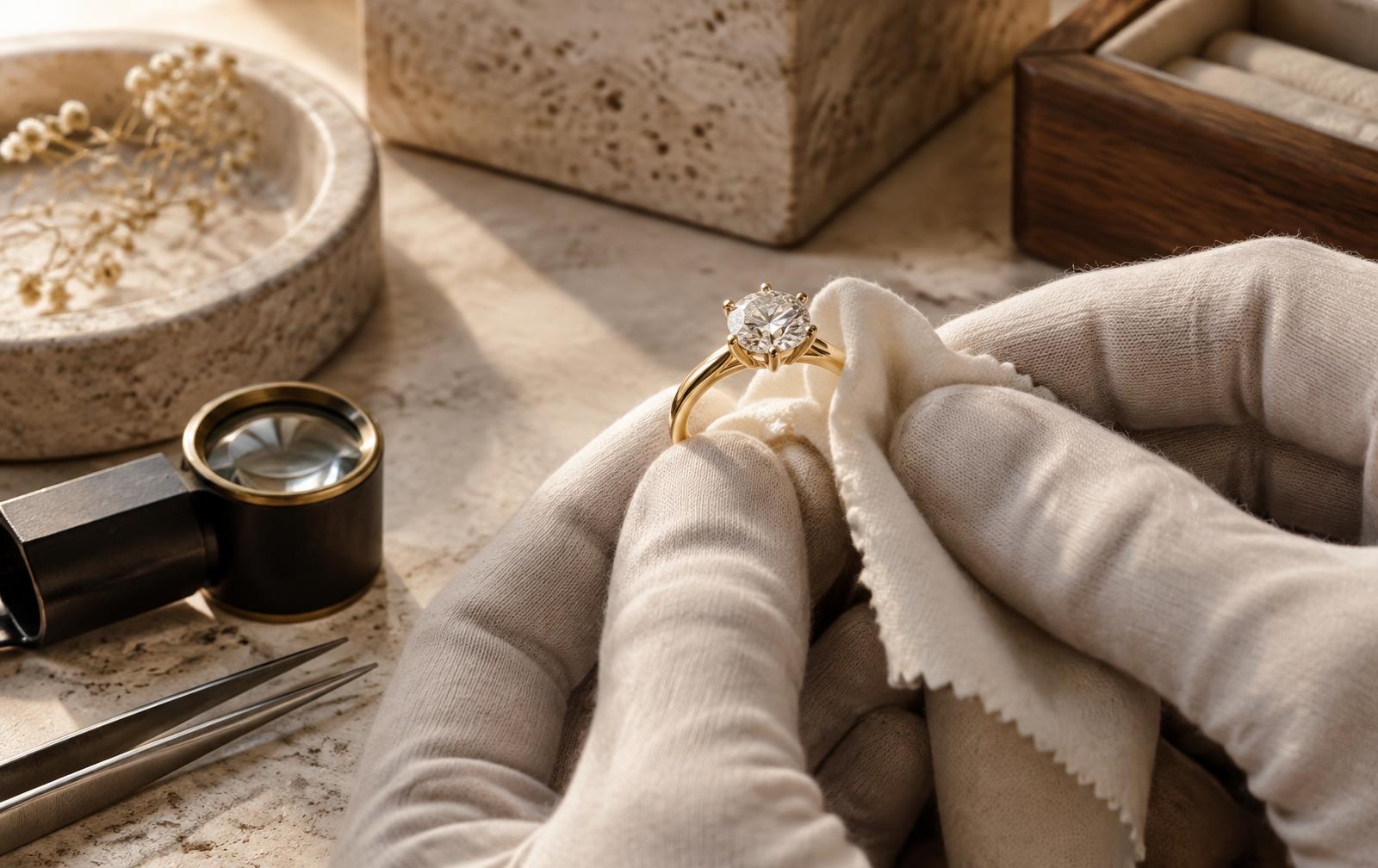
01 · Caring for diamond jewelry
Attention preserves the details.
Routine care supports appearance, setting security and longevity. Diamonds are durable, but a finished jewel includes metal, prongs, pavé, clasps and other structures that respond to daily wear.
Before cleaning, look for a loose stone, bent prong, misshapen ring or insecure clasp. If anything feels wrong, stop wearing the piece and seek professional guidance rather than attempting a repair at home.
02 · Cleaning at home
Gentle is the standard.
For suitable diamond jewelry in sound condition, use warm water, a few drops of mild dish soap, a soft-bristle brush and a soft lint-free cloth.
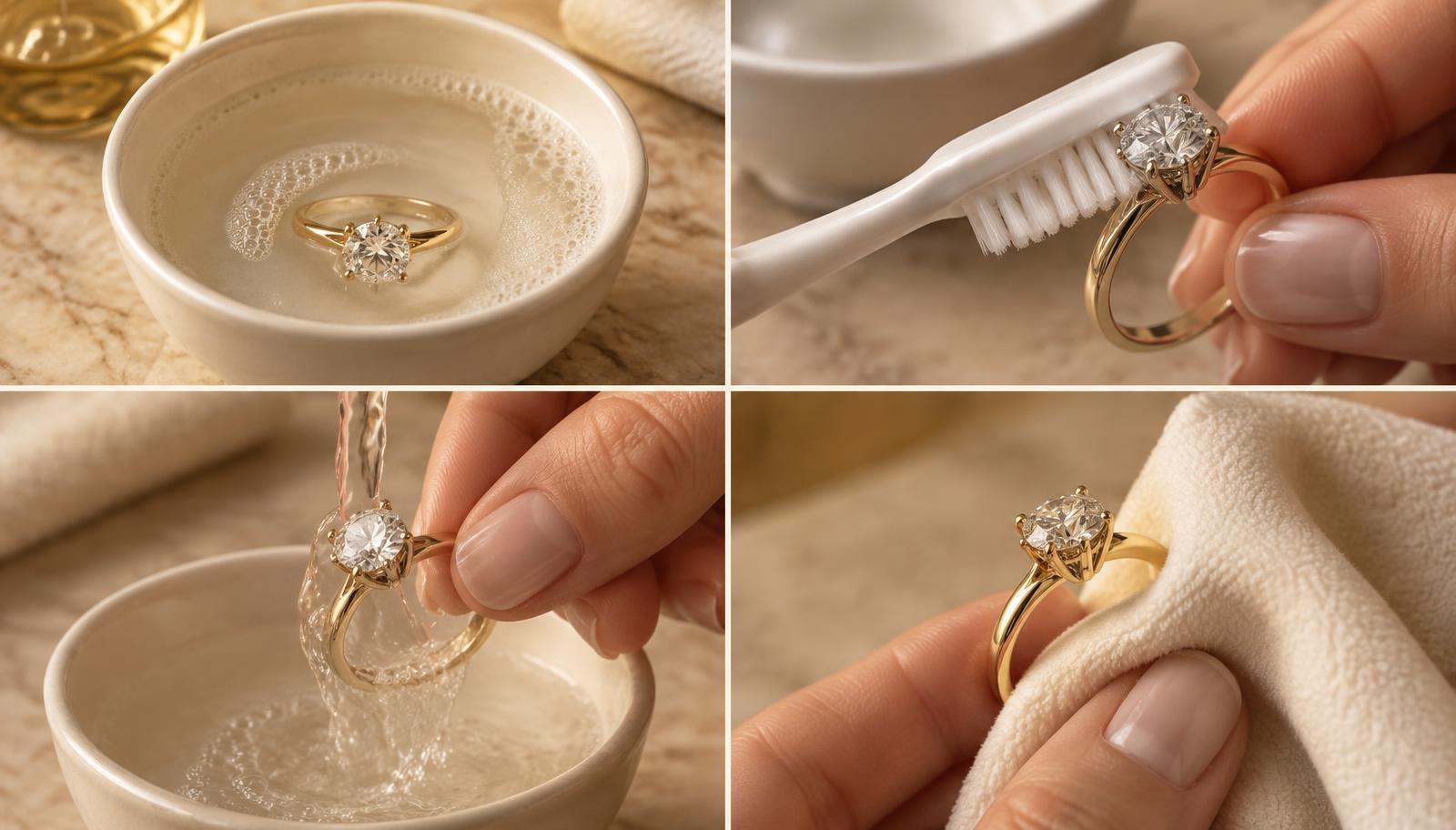
Warm water + mild soap
Brush gently with soft bristles
Rinse thoroughly and safely
Dry with a lint-free cloth
Avoid harsh treatment.
Avoid bleach, chlorine, abrasive cleaners and harsh household chemicals. Inspect for loose stones before any vigorous cleaning.
Ultrasonic and steam are not universal.
Delicate, damaged, heavily included, antique, vintage or structurally complex pieces should be referred for professional guidance before machine cleaning.
03 · When to remove jewelry
Set it aside before the risk begins.
Removal is a practical habit, not an alarm. Keep a secure place ready before starting activities that introduce pressure, impact, chemicals or abrasive grit.
Gym & heavy lifting
Pressure, impact and metal equipment can damage a ring.
Gardening & manual work
Soil, grit and tools can abrade metal or stress settings.
Household chemicals
Bleach, chlorine and harsh cleaners can affect metals and finishes.
Pools & hot tubs
Remove jewelry before chlorinated water and active swimming.
Impact-risk activities
Set the piece aside before work or sport with a meaningful impact risk.
04 · Professional inspection
Small structures deserve a closer look.
Prongs and settings can wear. Pavé and accent stones, clasps and shanks should be inspected periodically, especially on frequently worn pieces. After a significant impact, arrange an inspection sooner.
If a stone feels loose, a prong suddenly catches, a ring bends, a clasp no longer closes securely or the piece suffers a hard impact: stop wearing it and contact a specialist. Do not attempt a do-it-yourself repair.
05 · Storage & travel
A place for every piece.
Store jewelry separately in soft pouches or lined compartments. Diamonds can scratch other jewelry, while a finished diamond jewel can still be damaged by impact against other hard materials.
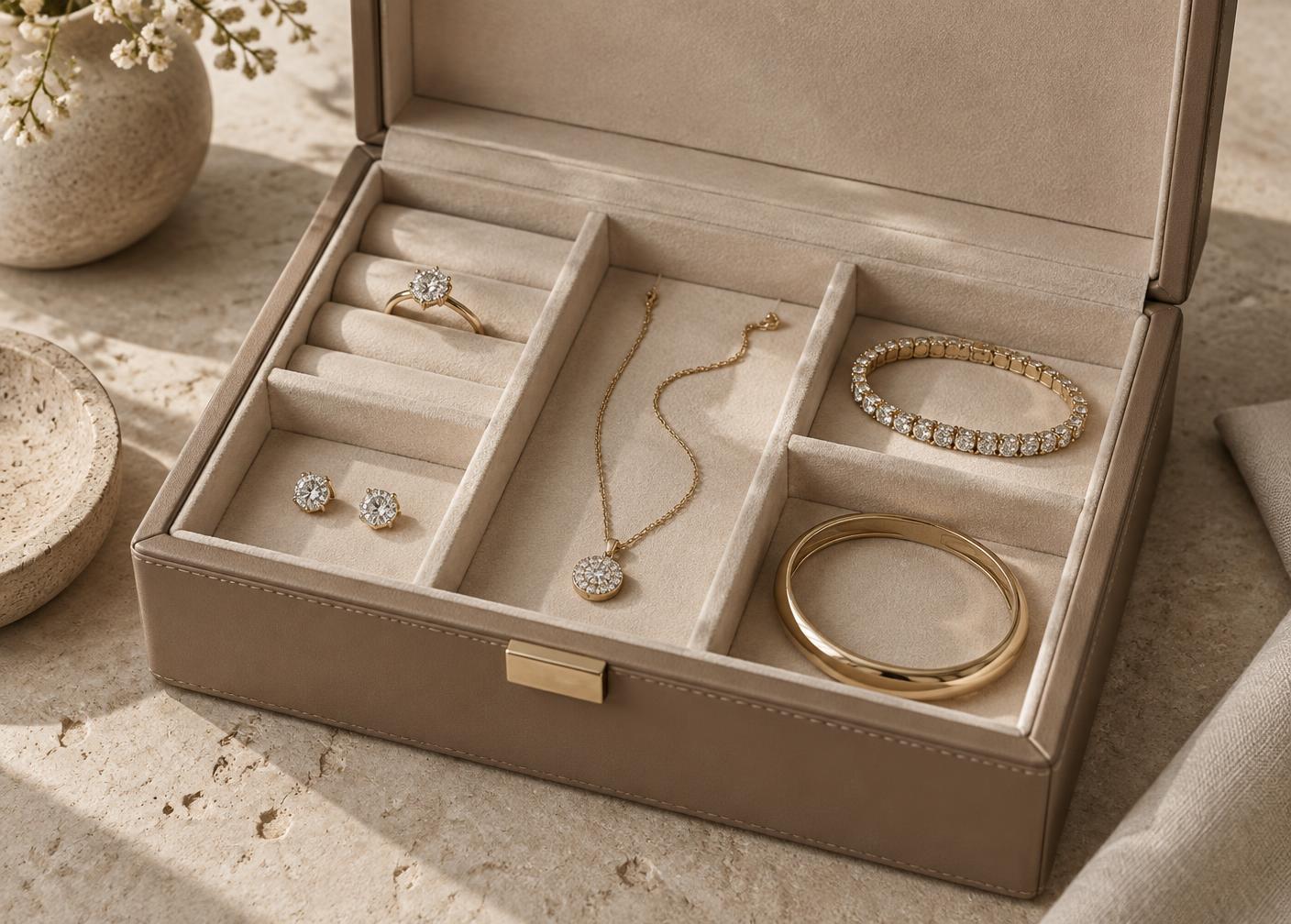
At home
Use separate soft compartments. Lay chains carefully and keep them unclasped where appropriate to reduce tangling.
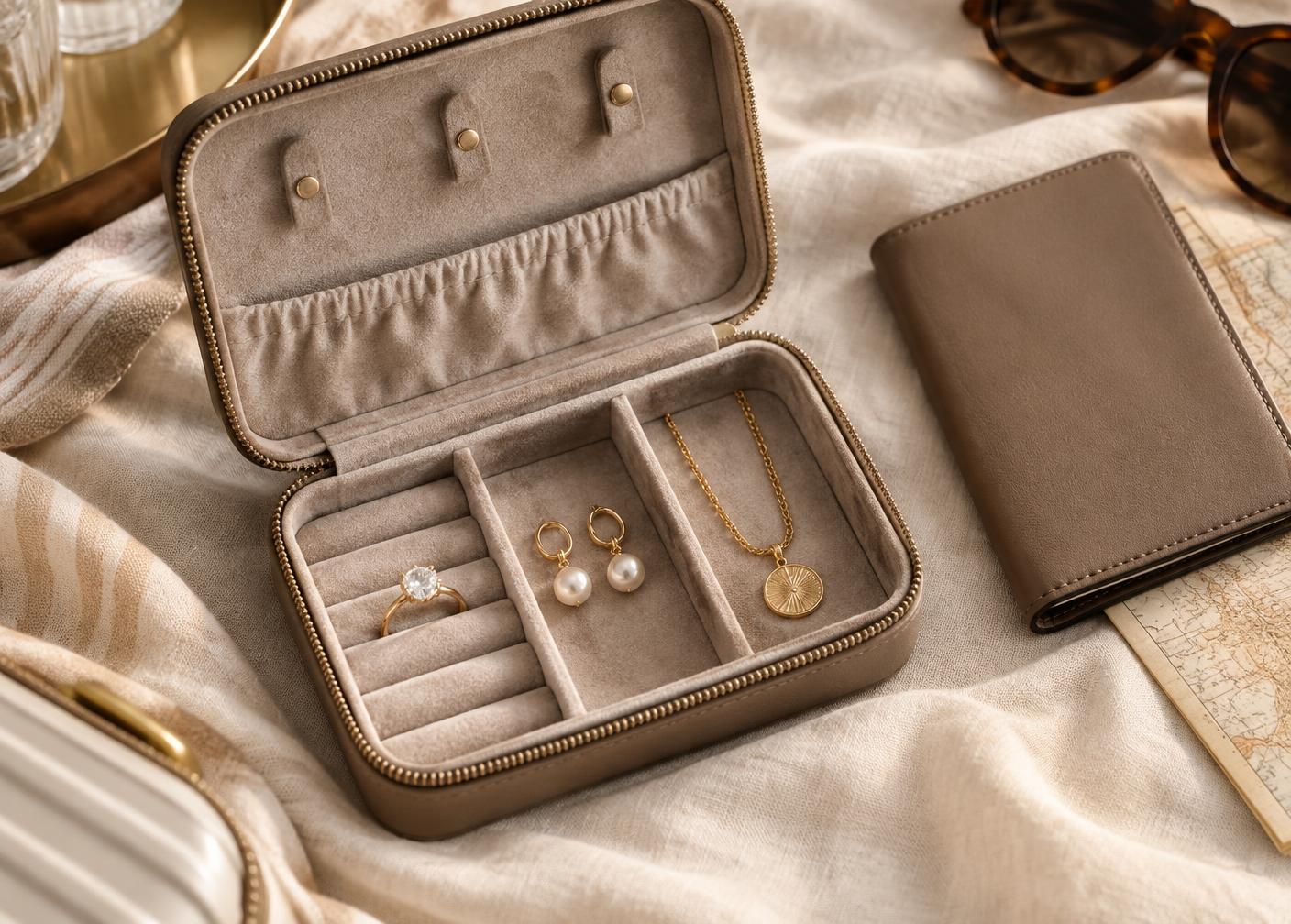
In transit
Carry high-value jewelry securely in a structured, padded case. Avoid loose storage together and keep purchase, report and appraisal records separately where appropriate.
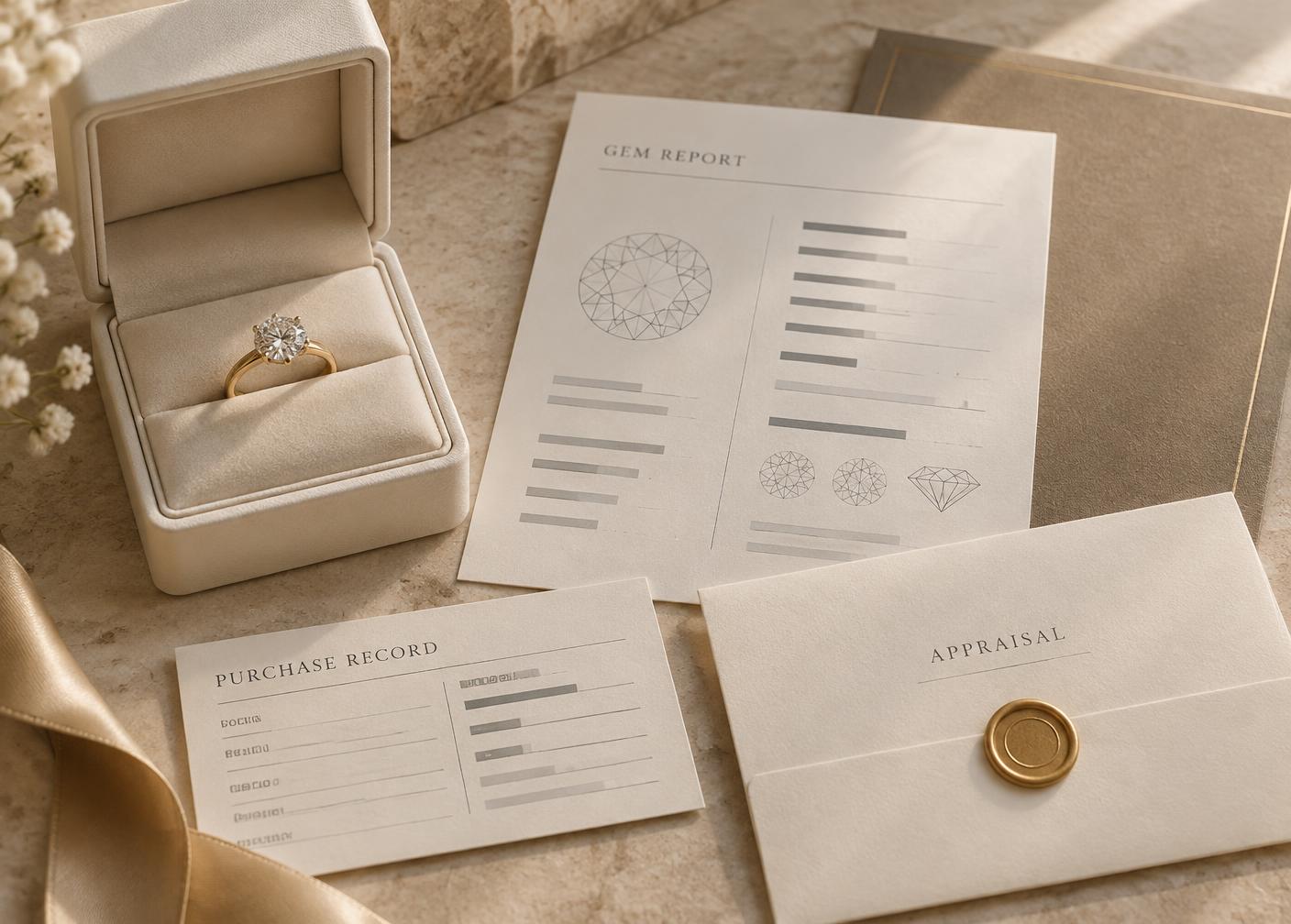
06 · Documents that matter
Keep the story and the record.
- Grading Report
- Documents gemological characteristics and origin; it is not a monetary valuation.
- Appraisal
- A separate valuation document commonly used when arranging insurance.
- Proof of Purchase / Order Record
- Records the purchase and available design details.
- Insurance
- Separate third-party coverage. A warranty is not a substitute for insurance.
07 · Origin & metal care
Care for the finished jewel.
Natural and laboratory-grown diamonds differ in origin, but ordinary cleaning and wear-care principles are generally the same. Focus on the setting, metal, construction and present condition.
Yellow Gold
Normal scratching and patina develop with wear; professional refinishing can be considered as needed.
White Gold
Some pieces use rhodium plating. Renewal depends on wear and the product-specific finish.
Rose Gold
Its warm alloy tone should be cleaned gently like other gold alloys.
Platinum
Naturally white platinum develops surface scratches and patina with wear.
08 · Nicotalya client care
Care, within approved terms.
Cleaning & Inspection benefits are not shown while the policy remains under merchant review. Repairs, refinishing, plating, stone replacement, structural work and shipping are never implied as complimentary.
Common questions
Questions, considered.
How often should I clean my ring?
Clean gently when residue or dullness appears, provided the ring is in sound condition. Frequently worn pieces benefit from regular light care and periodic professional inspection.
Can I shower with diamond jewelry?
Routine exposure to soap and personal-care products can leave residue. Removing jewelry before showering reduces buildup and the chance of snagging or impact.
Can I sleep in my engagement ring?
Removing it before sleep can reduce pressure, snagging and unnecessary wear on prongs and delicate details.
Can I use an ultrasonic cleaner?
Not automatically. Suitability depends on the stone, inclusions, setting, construction and condition. Delicate, damaged, antique, vintage or complex pieces need professional guidance first.
How should I store diamond jewelry?
Store pieces separately in soft pouches or lined compartments so hard surfaces and settings do not strike or scratch neighboring jewelry.
What if a stone feels loose?
Stop wearing the piece, secure it safely and contact a specialist. Do not test or tighten the setting yourself.
Is care different for natural and laboratory-grown diamonds?
Ordinary care principles are generally the same. The finished jewelry’s setting, metal, construction and condition guide the safest approach.
House care