
Engagement Rings
Pairing a Wedding Band
An engagement ring and wedding band are worn together for years. Considering their fit early keeps the pairing effortless.
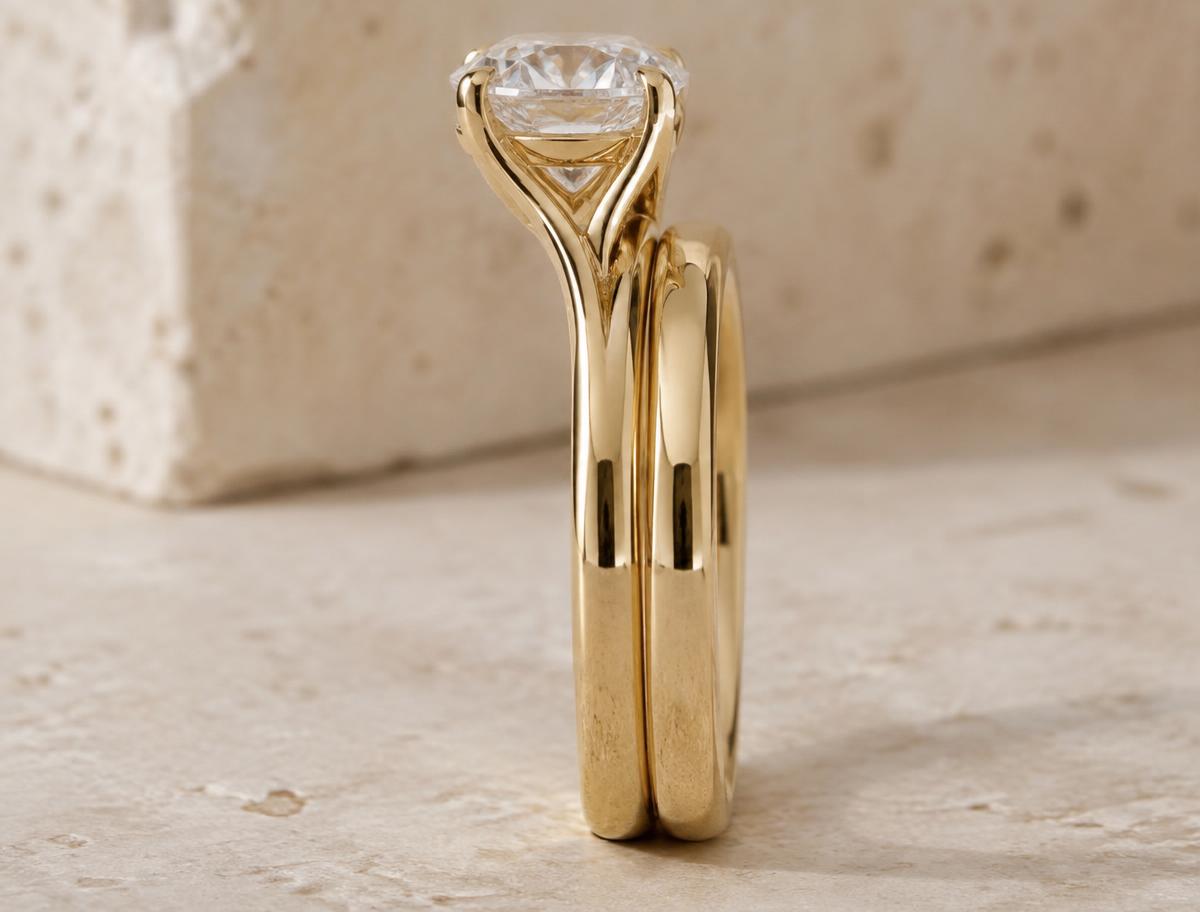
Flush fit
The head and gallery clear the band path, so a straight wedding band can sit beside the engagement ring with little or no visible gap.
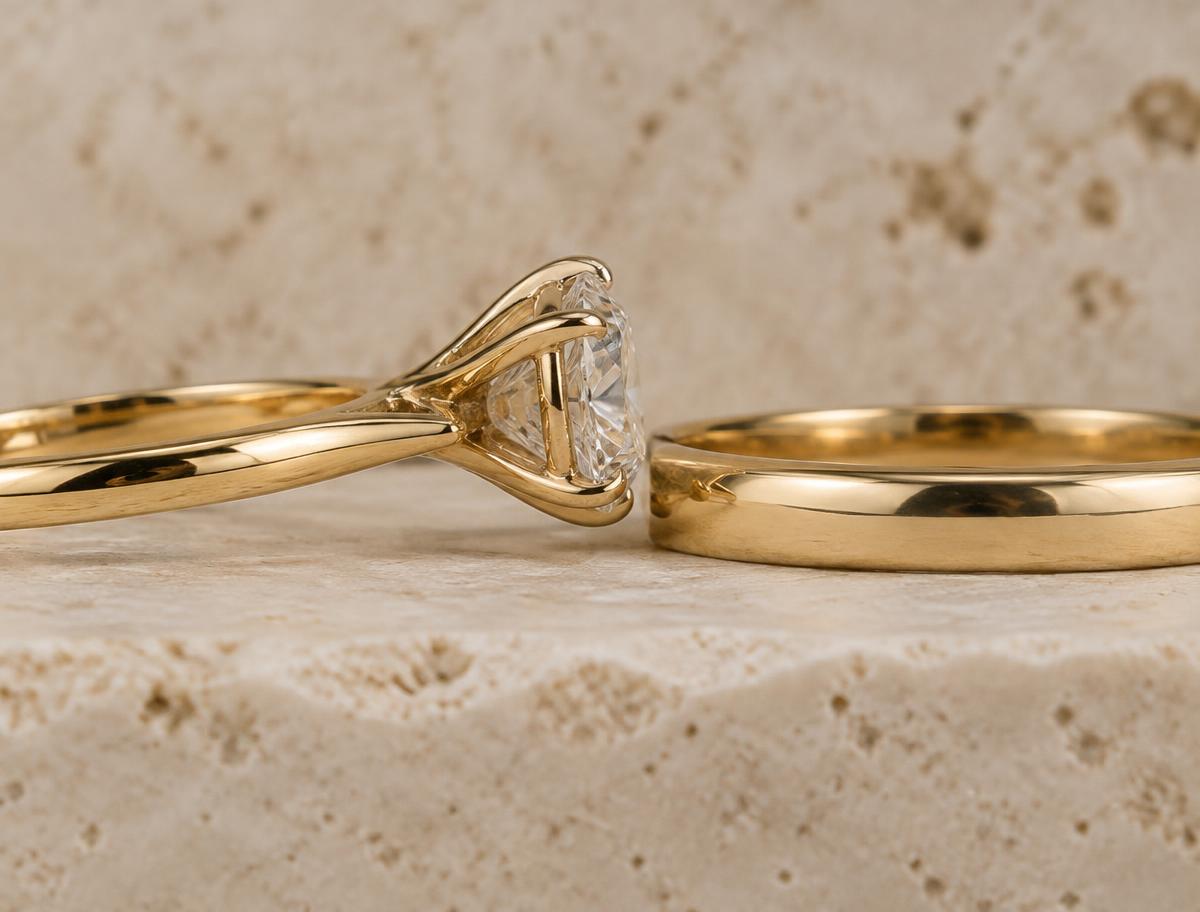
Non-flush fit
The basket or gallery protrudes into the band path. A straight band stops short and leaves a visible gap; a contour may be considered.
Flush-fit, contour or gap
A flush-fit ring lets a straight band sit directly against it. Low halos, wide heads or cathedral shoulders may call for a contoured band that curves around them, or for a deliberate gap.
Proportion and metal
A band close to your engagement ring’s width usually looks balanced. Matching metals feel cohesive; mixed metals can be intentional. Keep in mind that metals of different hardness can wear against each other over time.
Try them together
The best way to judge a pairing is on the hand. Our atelier can show compatible bands during a private appointment.