
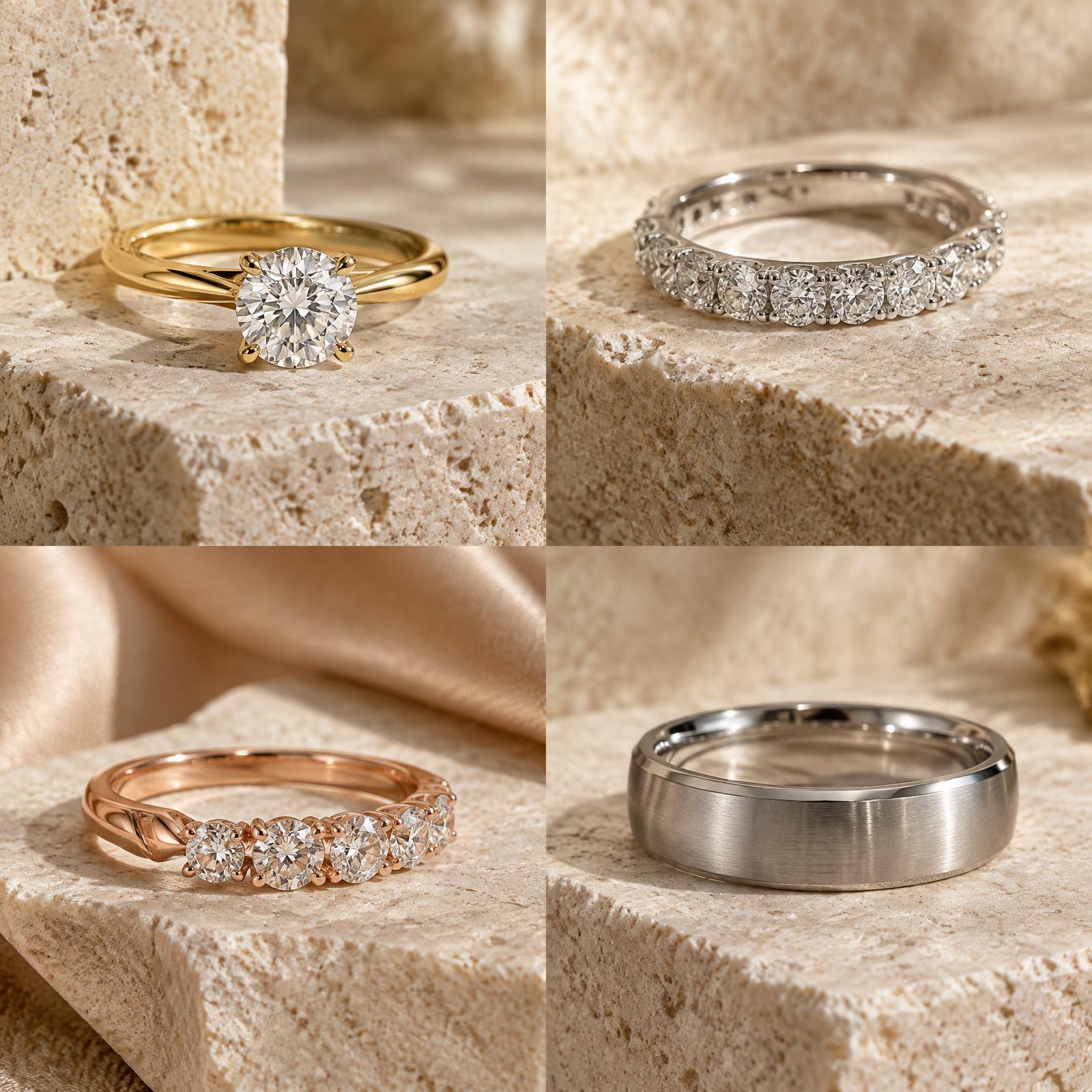
Yellow Gold
Yellow gold has a warm, classic color shaped by gold purity and its alloy recipe. Compare 14K and 18K for differences in gold content, tone, wear, and feel rather than treating either as universally better.
Learn moreThe Nicotalya Guide
Color, purity, character, and care — the materials that shape how a piece looks and lives.
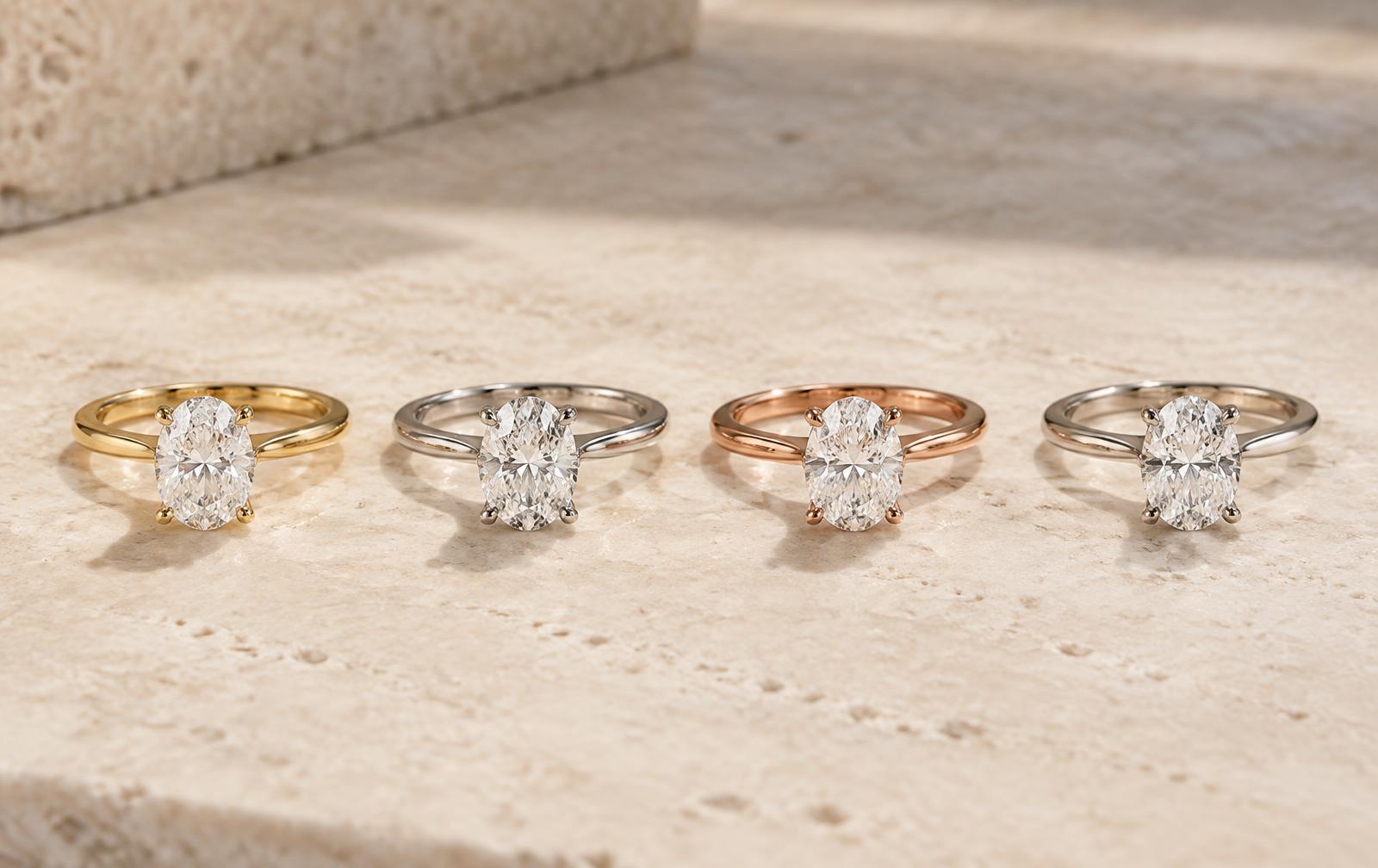
Meet the Metals
Yellow gold has a warm, classic color shaped by gold purity and its alloy recipe. Compare 14K and 18K for differences in gold content, tone, wear, and feel rather than treating either as universally better.
Learn moreWhite gold is a gold alloy with a white appearance. Many pieces use a rhodium finish; construction, wear, and the appearance you prefer can affect whether periodic refinishing is appropriate.
Learn moreRose gold is a warm, copper-toned gold alloy. Its exact color varies with gold purity and the maker’s alloy recipe, so two rose-gold pieces may not match perfectly.
Learn morePlatinum is a naturally white precious metal valued for density and durability. It can develop a soft patina with wear and may be professionally refinished when a brighter finish is preferred.
Learn morePurity & Composition
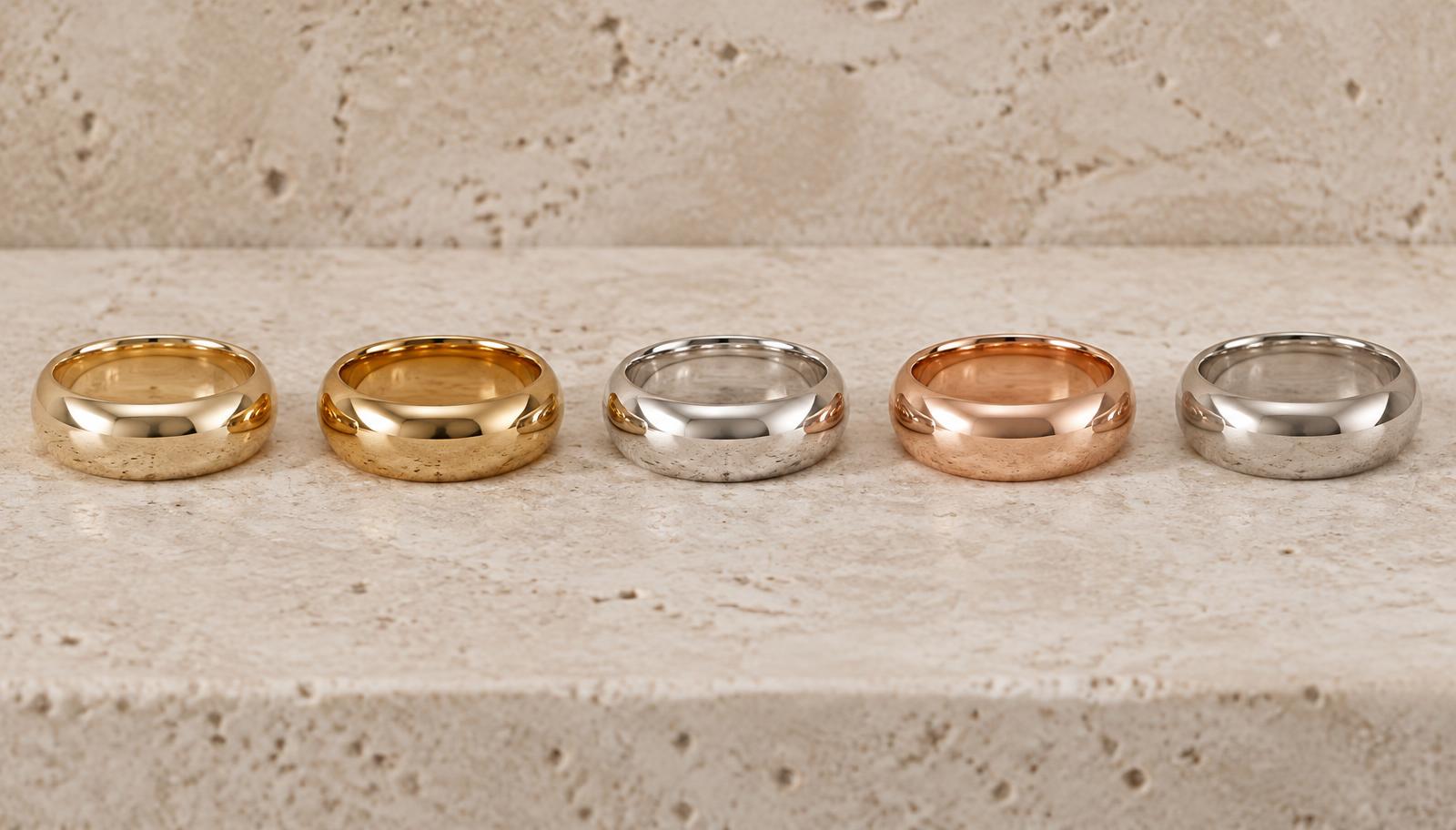
Karat describes gold purity; carat describes diamond weight. The alloy metals that make up the remainder influence strength, workability, and color.
| Metal | Precious-metal content | Why alloy metals are used | What to verify |
|---|---|---|---|
| 14K Gold | 14/24 gold · about 58.3% | Strength, workability, and color | Karat mark and exact piece details |
| 18K Gold | 18/24 gold · 75% | Strength, workability, and color | Karat mark and exact piece details |
| Platinum | Typically a high-purity platinum alloy | Wearability and working properties | Exact fineness marked or verified on the piece |
Swipe sideways to compare every column →
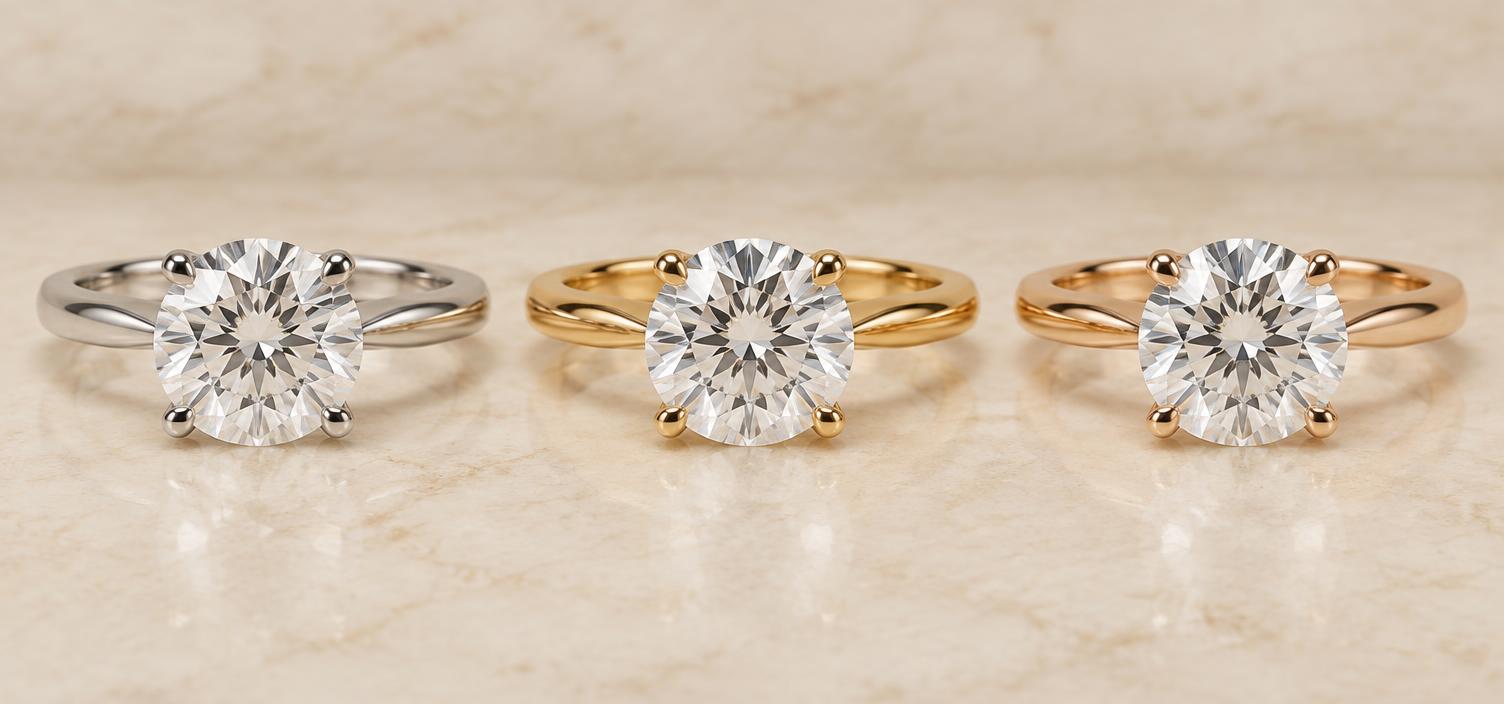
How Metal Changes the Look
Metal tone can influence how a ring and diamond are perceived, especially at the prongs, shank, and around accent stones. These are educational studies, not representations of a specific available product.
Wear, Care & Maintenance
All precious metals can scratch and show wear. Prong design, setting construction, activity, and routine inspection matter as much as the alloy choice.
Read Ownership & Care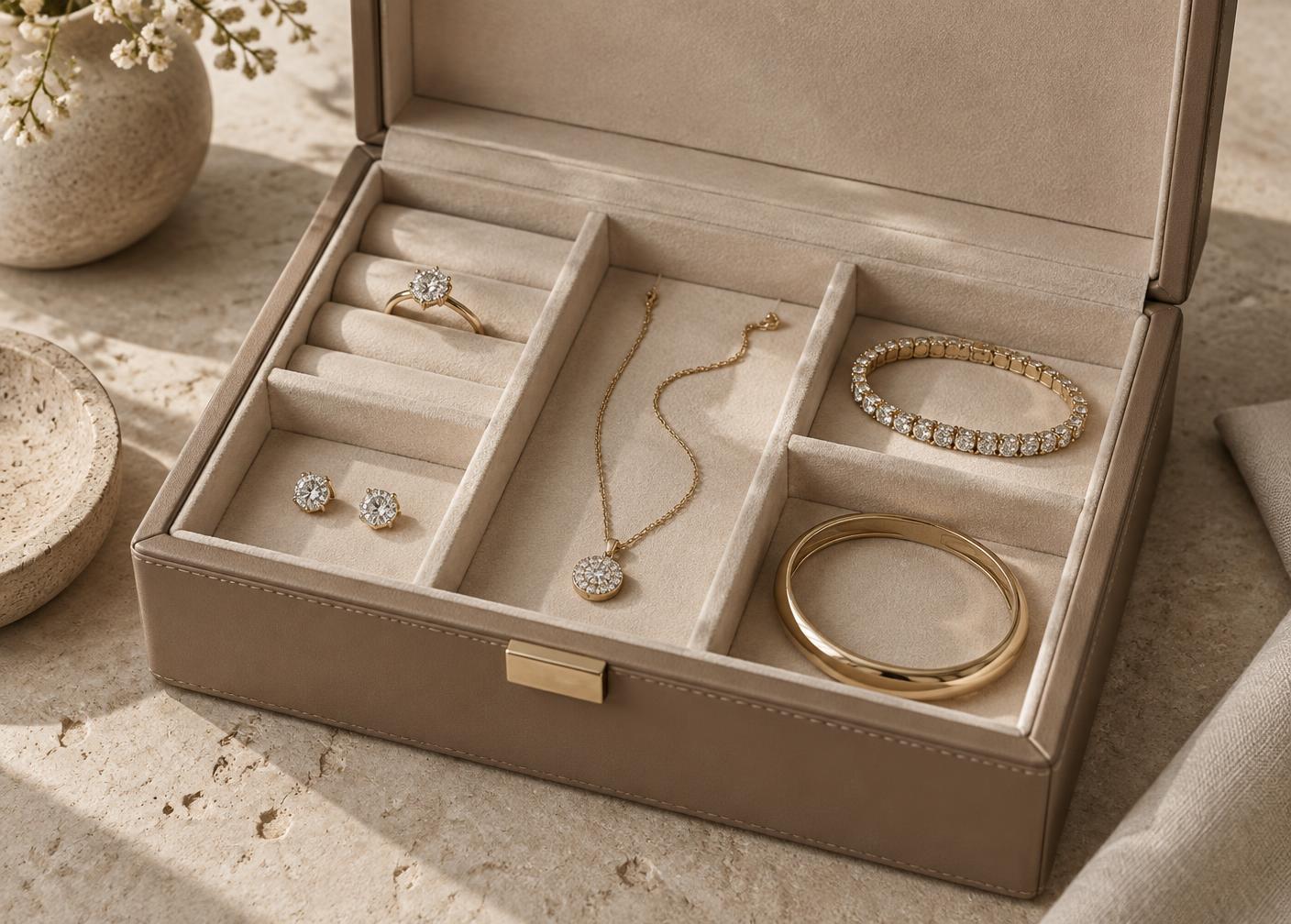
Choose for Your Life
| Metal | Color character | Relative gold purity | Everyday wear notes | Maintenance considerations | Weight-feel notes | Best questions to ask |
|---|---|---|---|---|---|---|
| 14K Yellow Gold | Warm, classic | About 58.3% gold | May show scratches and polish changes | Gentle cleaning and setting inspection | Often lighter than platinum | Do I prefer its tone and wear balance? |
| 18K Gold | Tone varies by alloy | 75% gold | May show scratches and finish changes | Care depends on color and finish | Varies by design | How does this exact alloy look beside my diamond? |
| White Gold | Cool white appearance | 14K or 18K when specified | Finish can change with wear | Ask whether rhodium finishing applies | Varies by karat and design | What finish is used, and what upkeep may it need? |
| Rose Gold | Warm copper-toned | 14K or 18K when specified | Tone and wear depend on alloy recipe | Gentle cleaning and routine inspection | Varies by karat and design | Will this tone coordinate with my other jewelry? |
| Platinum | Naturally white | Verify exact fineness | Can develop a soft patina | Professional refinishing is possible | Typically feels denser and heavier | Do I enjoy its weight and evolving patina? |
Swipe sideways to compare every consideration →
Continue