
Fine Jewelry
Diamond Stud Earrings Guide
Understand total carat weight, visible size, setting style, and backing options so you can choose a pair that feels right for everyday wear.
Understand total carat weight, visible size, setting style, and backing options so you can choose a pair that feels right for everyday wear.
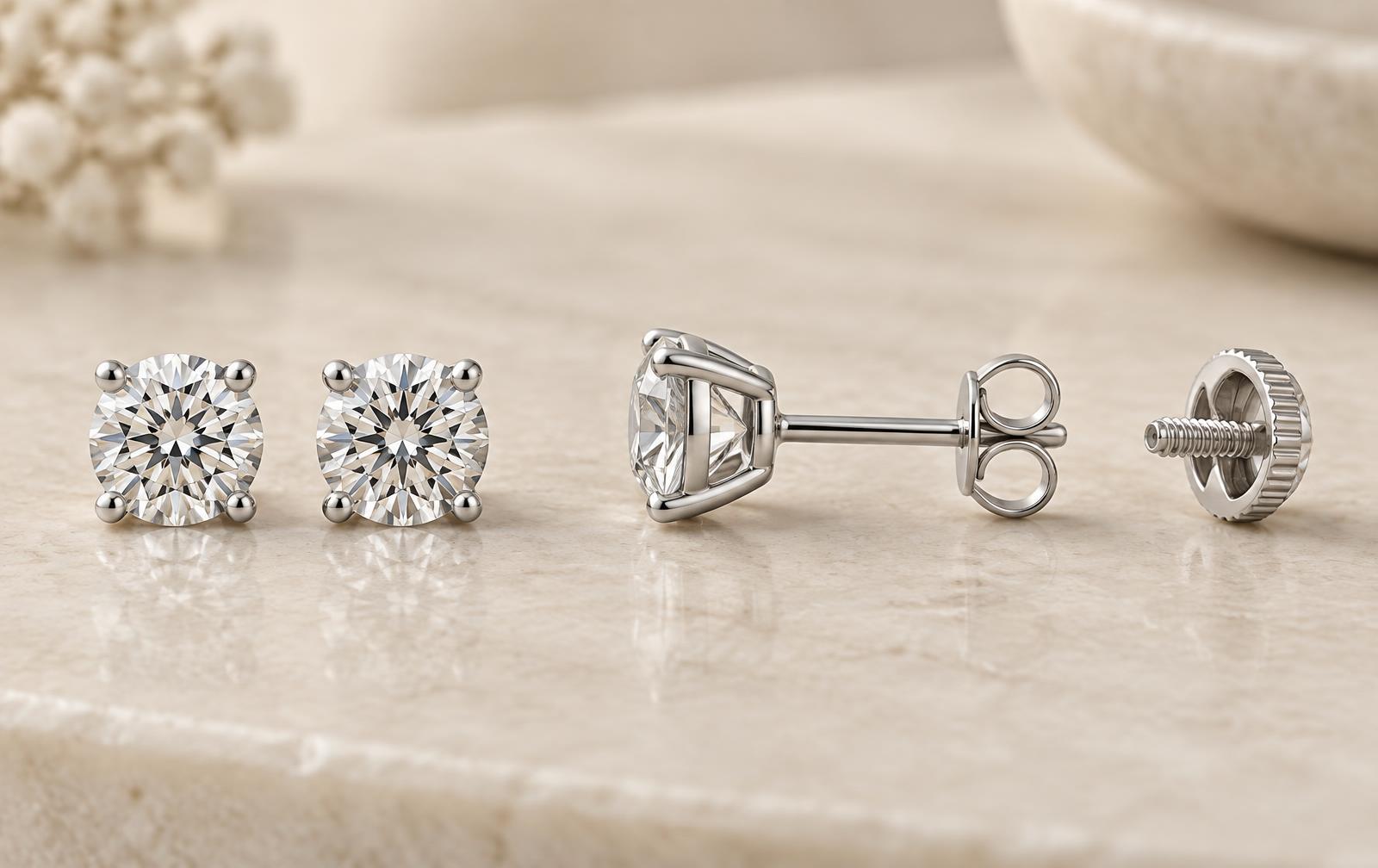
01 · CTW versus per-ear weight
Read the pair, then each diamond.
Stud earrings are commonly sold by total carat weight (ctw) for the pair. If a matched pair totals 1.00 ctw, an evenly matched pair would be approximately 0.50 ct per earring, though actual individual weights may differ slightly.
Carat is weight—not exact face-up diameter. The listed millimeter measurements and proportions of each diamond are the better guide to visible scale.
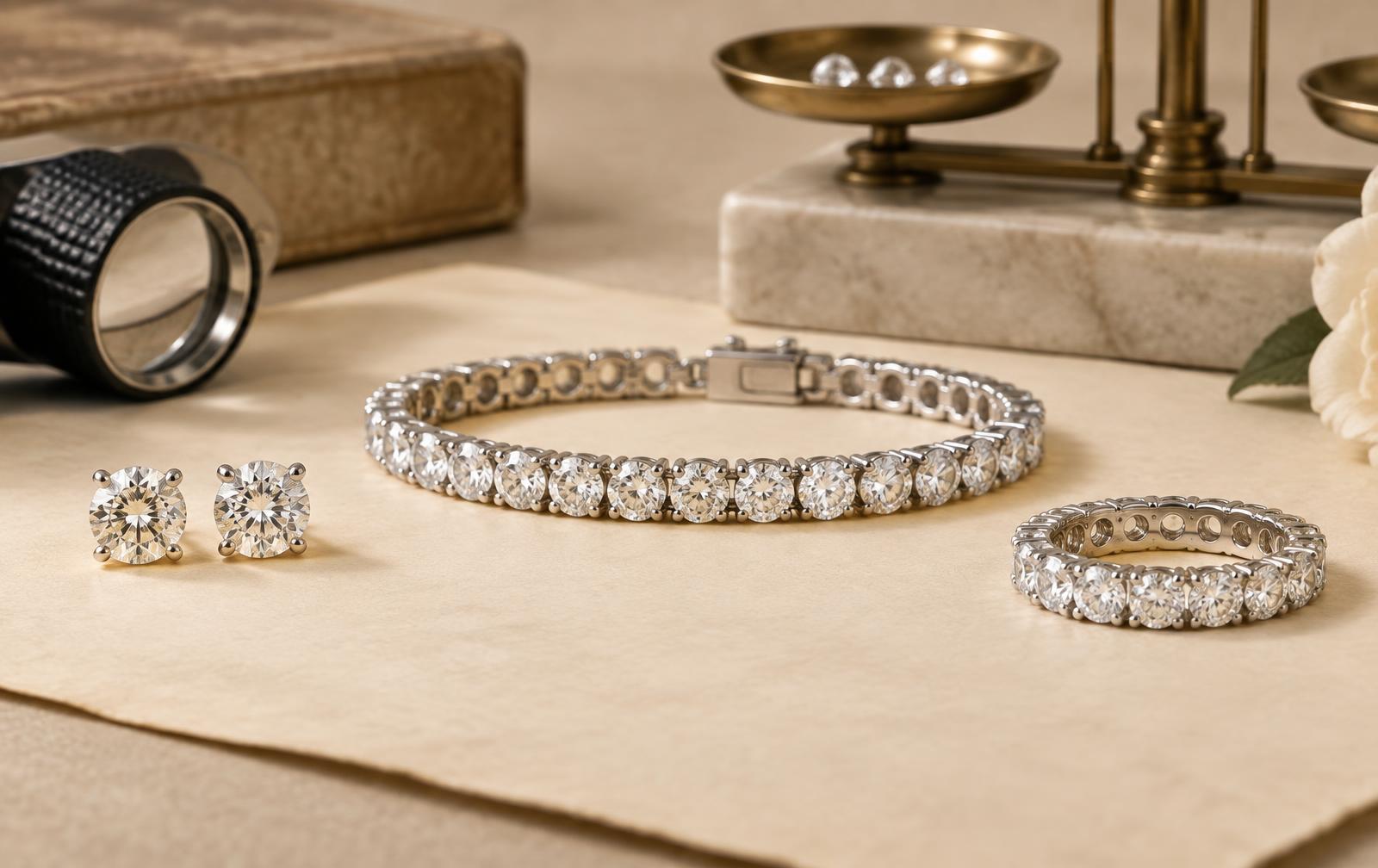
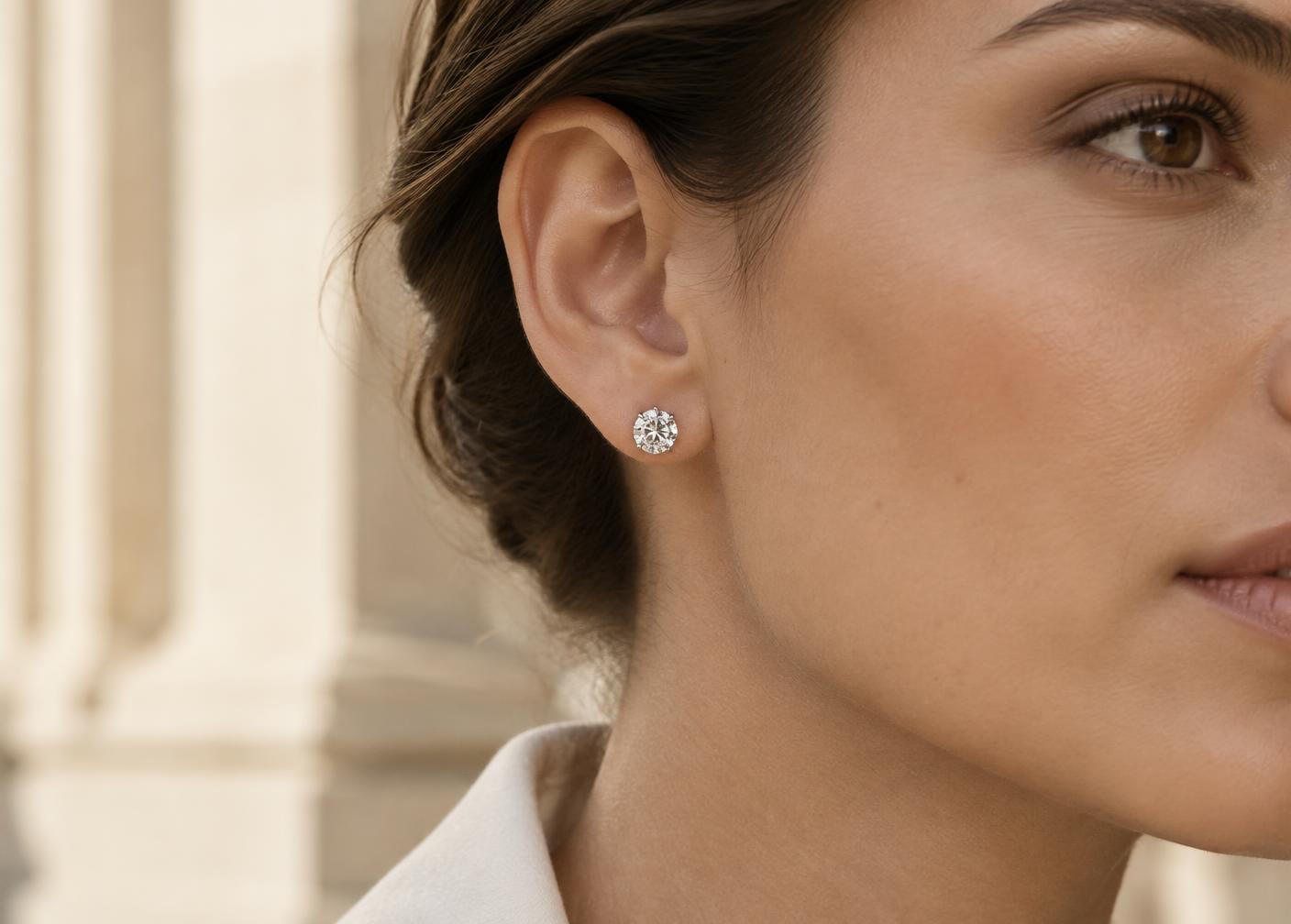
Shape, scale and proportion.
Round is the clearest starting point for comparison. Other shapes may create a different outline when offered. At equal weight, dimensions and proportions can create different face-up presence.
On-ear imagery is illustrative; it is not a size guarantee.
02 · Setting styles
How the diamond meets the ear.
Setting architecture changes visible metal, profile and how the stud sits. Confirm the construction of the specific pair rather than relying on the style name alone.
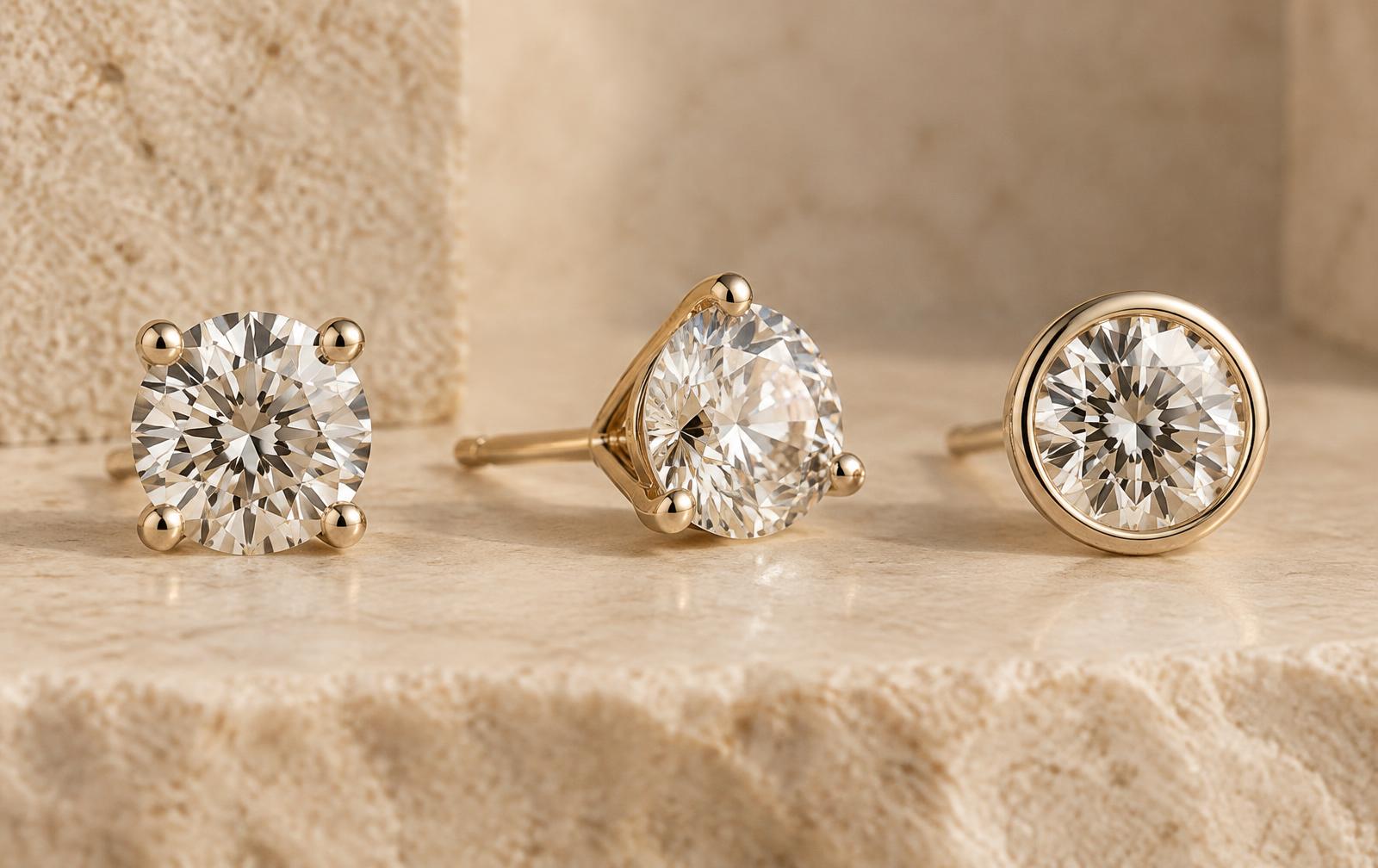
Four-prong
Four distinct prongs secure the diamond while keeping much of its outline visible.
Three-prong / martini-style
A triangular three-prong basket can sit relatively close to the ear, but fit depends on the complete construction.
Bezel
A metal rim surrounds the diamond for a smooth, framed appearance.
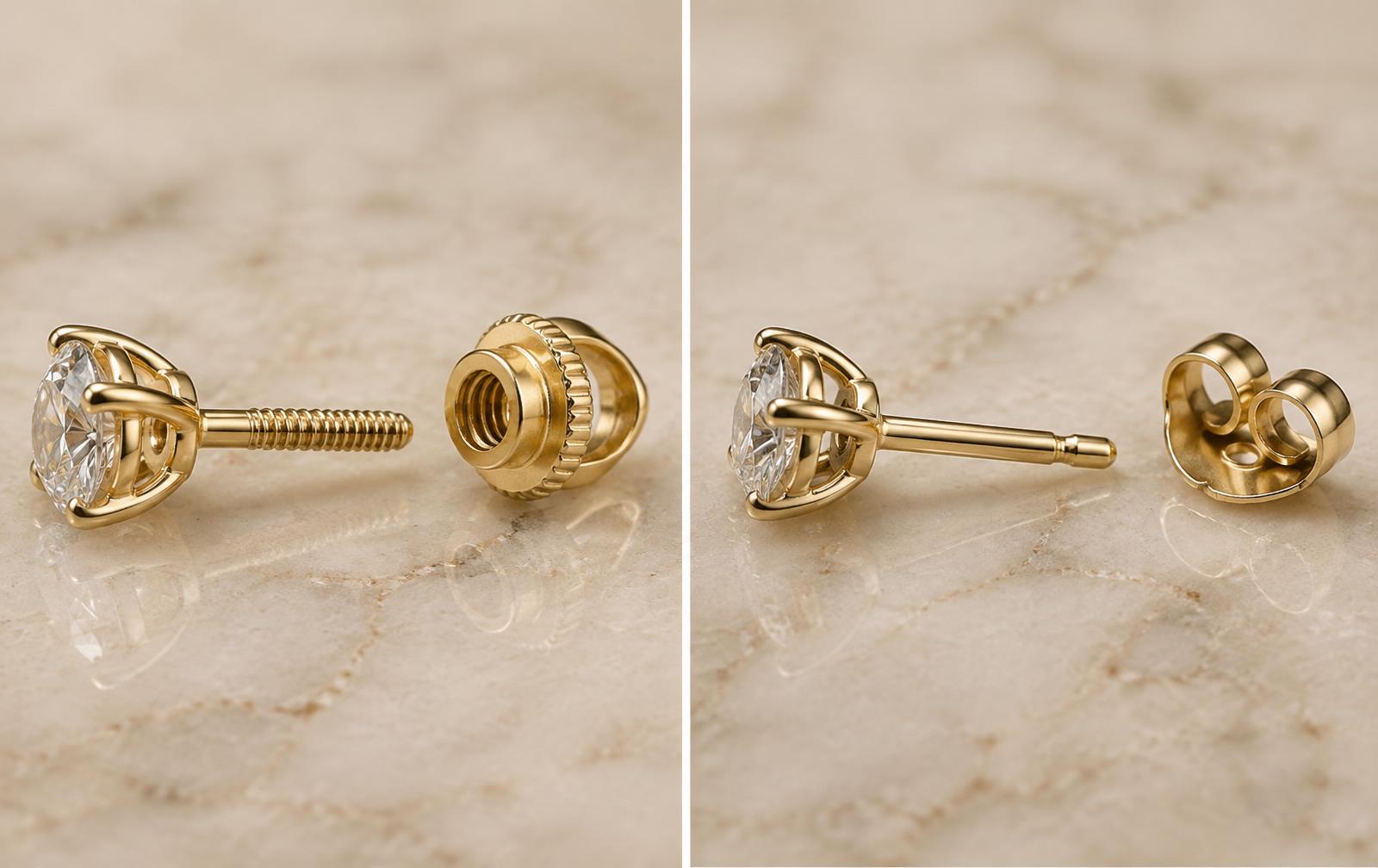
Screw back
A threaded back turns onto a compatible threaded post. Keep threads clean and check that the back engages correctly.
Friction / push back
A clutch presses onto a compatible post. Ease of handling, tension and condition should be considered for the actual piece.
03 · Backing options
Security and comfort, considered together.
No backing universally guarantees against loss. Screw and friction systems differ in handling, comfort and maintenance; other locking systems should be evaluated only when listed for the piece.
Inspect the post and back periodically. A back that feels loose, damaged or difficult to fasten deserves professional attention.
Two origins, where offered.
Natural and laboratory-grown diamonds can both be considered without hierarchy. Availability, origin and any report information must be confirmed on the specific product.
Explore diamond originsDaily wear and care.
Inspect settings and backs periodically, remove studs for high-impact activity or chemical exposure, store them separately and clean gently according to the complete care guide.
Ownership & CarePersonal guidance